
Hospital parking management: a guide for facilities and security teams
How hospital facilities and security teams manage parking: map parkers, set policy, then add staff permits, visitor payment, wayfinding and enforcement.
Published November 17, 2026
Hospital parking looks simple until you stand in a garage at 7:00 AM on a Monday. A night-shift nurse is trying to leave, a day-shift nurse is circling for a space, a patient who has never been on campus is looking for the right entrance, and a visitor is at a pay station hunting for change. They all need the same garages, and the facilities, security and parking teams who run those garages hear about every problem.
Hospital parking management is the set of rules, tools and routines that decide who parks where, how they pay, how they find a space and what happens when someone parks in the wrong place. This guide is for the facilities, security and parking directors who own that system. It covers how to map your parkers, set policy before you buy technology, and then build in staff permits, visitor payment, wayfinding and enforcement without making a hard day harder for patients. To see how the pieces fit on one platform, read about Spot's hospital parking management software.
Why hospital parking is its own problem
A hospital is not a commercial lot or a campus quad. Four things set it apart:
- Shifts. Staff arrive and leave around the clock, with peak overlap at shift change. The same garage can be full of staff at 6:45 AM and need open rows for visitors by 9:00.
- First-time, stressed visitors. Many patients and families are arriving for an appointment or a hard conversation. They are in no mood to learn a new payment app.
- Mixed groups in the same decks. Patients, visitors, employees, contractors and vendors share structures, and each group has a different rule.
- A cost to getting it wrong. A visitor who cannot find or pay for a space is late. A citation handed to a patient's family is a complaint waiting to happen.
The pain tends to show up in the same places: staff parking in visitor rows, first-time visitors circling the campus, and pay stations and paper tickets that slow everyone down. A fourth often stalls projects: security and IT reviews of new tools.
Start by mapping who parks where
Before you pick a tool, write down your parker groups and where each belongs.
| Group | Question to settle |
|---|---|
| Patients and visitors | Where do they park, how do they pay, and how do departments validate? |
| Staff by shift | Which lots does each group get, and do rules change by time of day? |
| Emergency-area and short-term spaces | How long is "short," and who decides when a stay has run over? |
| Vendors and contractors | Do they get a permit, a paid session or a host-sponsored pass? |
| Overflow decks | When do overflow rules switch on, and who can use them? |
The goal is a one-page answer to "who may park here, and when?" for every row, level and lot. If you cannot write that page, no system will enforce it well. If you can, most of the technology work is translating it into rules.
Set the policy before you buy the technology
Tools cannot make these calls for you:
- Which rows are for visitors and which are for staff. Visitor rows nearest the entrances are the usual flashpoint. Decide the boundary and make it visible with signage.
- How short-term spaces work. Many hospitals reserve spaces near the emergency department or main entrances for short stays. Decide the time limit, how it is monitored and how you treat someone who is plainly in a medical situation.
- What a first violation looks like. A warning is not a citation. Spot's handheld enforcement lets an officer choose either one, which suits a place where many violations are honest mistakes.
- Who reviews and who can override. Decide who can void or escalate a flagged vehicle and what evidence they see.
- How validation works. If departments cover parking for some visitors, write down how that works today so your tool can match it.
Staff permits that work across shifts and garages
Paper hangtags are easy to lend, copy and lose, and someone has to walk the rows to check them. A plate-based digital permit removes most of that. Spot's staff permits are digital and tied to the plate, with rules set per lot that can change by time of day. Staff rows, visitor rows and overflow decks can each follow their own policy.
Decide which garage each staff group is assigned, what happens when it fills, and which teams can see and change permits. Spot supports role-based access, so parking, security and admin staff each get the right permissions.
Visitor payment that does not need an app
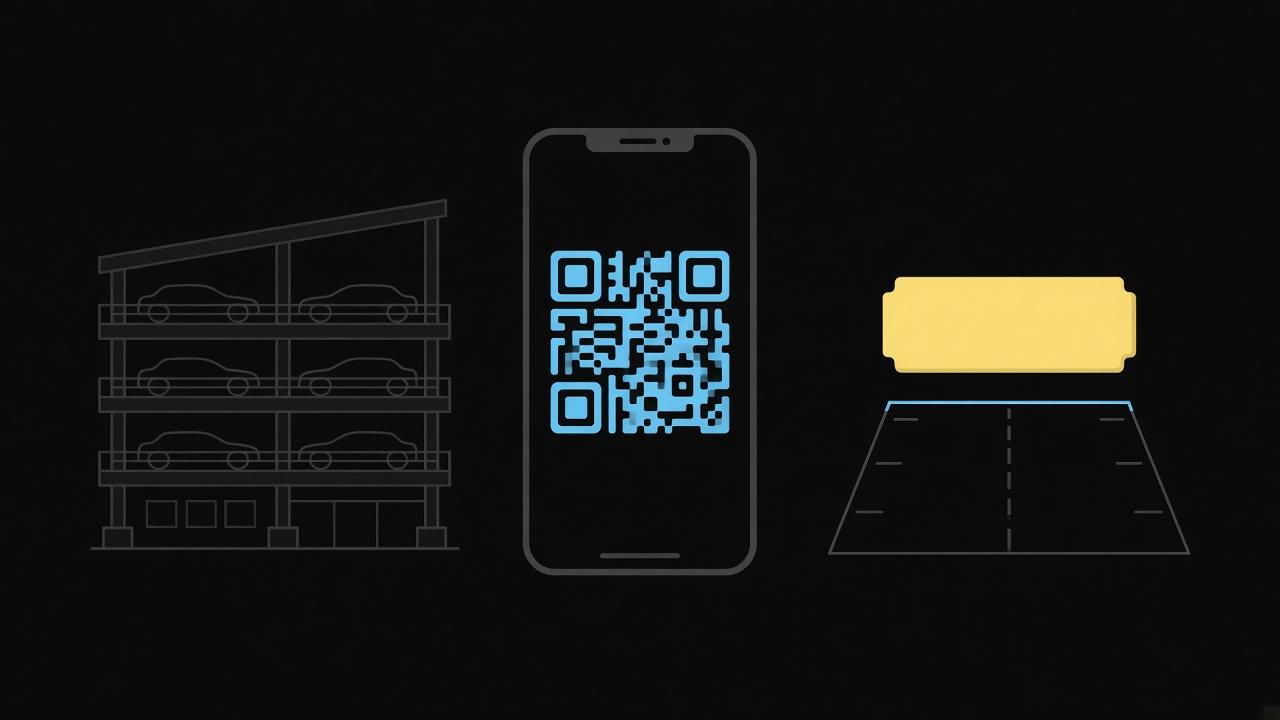
For patients and visitors, the best payment experience asks for the least. A visitor scans a QR code on a sign and pays in the browser on Manage My Visit, Spot's guest site, with no account and no app download. Card data is handled on PCI Level 1 tokenized checkout through Spot's payment processing.
Two details matter for hospitals. First, QR codes point to a destination you set in the Admin Portal, so you can change where a code leads without replacing the sign. Second, a QR code can point to a checkout with a validation already applied, so a department that covers a visitor's parking can hand over a link or sign instead of a paper pass. Tell Spot how your validations work today and they will map them.
If a staff member needs to host a guest, visitor invites let a permit holder send a link that the guest claims, within limits you set in Admin.
Wayfinding for first-time arrivals
Circling is a design problem as much as a policy problem. When one garage is full and the next is half empty, drivers who do not know the campus keep passing open stalls. Spot's wayfinding shows live occupancy and routes drivers to a garage with open stalls, in the Spot Parking app, on an embeddable web map or by scanning a QR code at the entrance. The web map can be embedded on the hospital's own site, so visitors can check before they leave home. Your front desk also stops giving parking directions by hand.
Keeping visitor rows for visitors
Enforcement is where hospital parking either works or generates complaints. The usual goal is narrow: keep staff vehicles out of visitor rows and keep short-term spaces turning over.
Spot checks each plate against staff permits and paid visitor sessions, using LPR or a handheld read. A staff vehicle in a visitor row goes to a review queue with the plate, lot and timestamps attached. That review step matters in a hospital: a person looks at the evidence before anything stands, and the same evidence is there if the driver questions it later.
There are two ways to run it, and many sites use both:
- Phones first. Scan to Cite runs in Spot Watch on any iOS or Android phone, with no lot cameras and no installation. The phone locks the plate, checks the rule and lets the officer cite or warn from the lot.
- LPR where cameras make sense. License plate recognition adds camera coverage for garages and lots where it is worth installing. Officers using Spot Watch can still void, override or escalate any flagged session.
Both feed the same enforcement workflow, so you can start on phones and add automation later. If you are weighing cameras, our guide to how much LPR parking enforcement costs breaks down the cost pieces and how to estimate payback. For the wider picture, see what is automated parking enforcement.
When a driver does receive a citation, they pay or appeal online in Manage My Visit. Administrators review the timestamped evidence and approve or deny the appeal.
Gates and kiosks, if your garages are gated
If your garages already have gates, replacing them is a real project. Spot's PARCS gates and kiosks work with most existing gate controllers through standard relays. The system matches the plate at the lane: paid and permitted drivers' arms go up, and everyone else pays at the QR code or the kiosk. You do not necessarily have to replace gate hardware to move to plate-based access.
Reporting that helps you plan
Spot's analytics include live operations views of occupancy and active sessions plus historical dashboards, with CSV or Excel export. Useful questions for a hospital: which garages fill first and when, whether visitor rows are used by visitors, and whether a rule change helped or just moved the problem. To estimate what better compliance could be worth for your lots, try the parking revenue and ROI calculator with your own inputs.
Security and IT review
Any system that handles payments and plates will go through security and IT review, so prepare early. Spot documents SOC 2 Type II, PCI Level 1 tokenized checkout, role-based access control and regional data residency, with a US-region data plane by default, and hosts artifacts in its Trust Center. Spot works from plates, sessions and payments; it is a parking system, not a clinical system. Ask your own security team what it requires, and ask any vendor for documentation directly.
A practical rollout: start with one garage
- Pick one garage with a visible problem, such as staff in visitor rows or a long pay-station line.
- Write the rules for it: staff, visitor and short-term rows, with time-of-day changes.
- Turn on digital staff permits and QR payment and put up signs.
- Start enforcement on phones, with warnings first if that fits your policy.
- Review the data after a few weeks and adjust before moving to the next garage.
- Add wayfinding, gates or LPR where the data shows they would help.
Spot describes the same approach on its hospitals page: start with one garage, with permits, visitor payments, wayfinding and enforcement sharing one plate record across the campus. If you would like to see it against your own garages, talk to our team.
Frequently asked questions
What is hospital parking management?
Hospital parking management is how a hospital decides who parks where, how patients, visitors and staff pay or get permits, how drivers find open spaces and how rules are enforced. It usually covers staff permits, visitor payment, wayfinding, enforcement and reporting.
How do you keep staff out of patient and visitor parking?
Tie staff permits to the plate and to the lots each group may use, then check plates against those permits and against paid visitor sessions. With Spot, LPR or a handheld read flags a staff vehicle in a visitor row and sends it to a review queue with the plate, lot and timestamps attached. Clear signage and a written policy matter as much as the tool.
Can visitors pay for hospital parking without an app?
Yes. With Spot, a visitor scans a QR code on a sign and pays in Manage My Visit, the browser-based guest site, with no account required. Card data is handled on PCI Level 1 tokenized checkout.
Do we have to replace our existing cameras or gates?
Usually not. Spot's gates and kiosks retrofit onto existing gate relays, and Scan to Cite runs on any iOS or Android phone with no lot cameras required. You can add LPR later where it makes sense.
How should a hospital handle parking violations fairly?
Decide your policy first: which rows are restricted, how short-term spaces work and whether a first violation is a warning. Spot's handheld enforcement lets an officer cite or warn, flagged vehicles can go through review, and drivers can pay or appeal online in Manage My Visit against the evidence on file.
What security reviews does Spot support?
Spot documents SOC 2 Type II, PCI Level 1 tokenized checkout, role-based access control and regional data residency. Spot works from plates, sessions and payments and is a parking system, not a clinical system. Ask your security team what it needs and request documentation through the Trust Center.