
Automated Parking Enforcement Systems: Buyer Guide
What to look for in an automated parking enforcement system: one permit and citation record, photo evidence, online appeals, and LPR or handheld options.
Published August 26, 2025
Universities may lose at least 60% of potential citation revenue when enforcement relies on manual patrols alone.
Parking enforcement has long been a labor-intensive, error-prone process. Officers walk lots with clipboards, manually checking permits and meters while violations happen in spaces they just passed. But automated parking enforcement is changing the game — using cameras, license plate recognition (LPR), and cloud analytics to detect violations as they occur, not hours later during the next patrol round.
This comprehensive guide covers how automated enforcement works, why operators are making the switch, and what to expect when implementing camera-based detection in your lots.
What Is Automated Parking Enforcement?
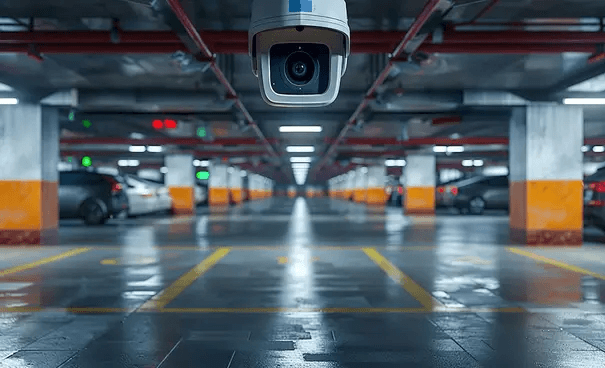
Automated parking enforcement uses camera-based license plate recognition (LPR) and cloud software to monitor parking spaces continuously. Instead of relying on officers to patrol and manually check permits, the system detects violations in real-time and generates citations with timestamped evidence.
Key components include:
- LPR cameras that read license plates and track space occupancy
- Cloud-based rule engine that evaluates permits, payments, and time limits
- Live violation alerts sent to enforcement officers
- Evidence collection with photos, timestamps, and audit trails for appeals
The result: operators catch more violations with less labor while providing stronger evidence for dispute resolution.
Why Manual Enforcement Falls Short
Traditional clipboard-and-patrol enforcement creates four compounding problems for parking operations:
| Challenge | Manual approach | Automated enforcement |
|---|---|---|
| Detection rate | ~40% of violations caught | ~99% detection accuracy |
| Labor costs | Full patrol shifts required | Up to 75% less enforcement labor |
| Evidence quality | He-said-she-said disputes | Timestamped photos + LPR data |
| Coverage consistency | Patrol windows only | 24/7 monitoring of every space |
Lost revenue from missed violations
Manual patrols operate on fixed schedules — typically 2-3 rounds per day. Violations that occur between patrol windows go undetected, representing significant lost citation revenue. Camera-based systems monitor continuously, capturing expired sessions and unauthorized vehicles as violations happen.
Labor inefficiency
Officers spend hours walking lots to check permits and payment status — time that could be spent on complex enforcement, customer service, or event management. Automated detection frees enforcement teams from repetitive patrol loops.
Weak appeals evidence
Without timestamped photos and precise violation data, appeals often become disputes over officer memory versus customer claims. Automated systems provide video evidence, exact timestamps, and plate verification that strengthen citation validity.
Automated parking ticket systems vs. manual patrols
An automated parking ticket system changes who finds the violation. With manual patrols, an officer has to be in the right row at the right time, write the plate down, and check it by hand. Violations between patrol rounds go unseen. With automation, cameras or officer phones read the plate, the system checks it against permits and paid sessions instantly, and the citation is created with photos, time and location attached. Officers spend their time on the vehicles that need attention instead of walking compliant rows, and drivers get a consistent, evidence-backed ticket they can pay or appeal online.
How Automated Parking Enforcement Works
The enforcement workflow operates in four stages:
- Continuous monitoring — LPR cameras scan license plates as vehicles enter, exit, and occupy spaces throughout the day.
- Real-time rule evaluation — The system checks each plate against permit databases, active payment sessions, and time-based restrictions.
- Violation detection — When a rule violation occurs (expired session, no permit, wrong zone), the system flags the incident with supporting evidence.
- Citation workflow — Enforcement officers receive live alerts with plate numbers, violation types, space locations, and photographic evidence to issue citations efficiently.
Camera placement and coverage
Modern LPR cameras can monitor multiple parking spaces from strategic mounting points — overhead gantries, light poles, or building facades. This approach requires fewer hardware installation points compared to per-space sensors while providing comprehensive lot coverage.
Integration with existing systems
Automated enforcement platforms integrate with permit management, payment processing, and citation systems. This means violation data flows directly into existing workflows without requiring officers to manually cross-reference multiple databases.
Industries Benefiting from Automated Enforcement
Universities and campuses
Campus parking faces unique challenges: semester permit surges, event parking, student appeals, and mixed-use lots with faculty, staff, and visitor zones.
See how this works on a campus with our university parking management software.
Typical outcomes:
- Reduced permit compliance disputes with timestamped evidence
- Better event lot management during peak demand
- Streamlined appeals process with video documentation
Commercial properties
Office buildings, shopping centers, and mixed-use developments struggle with unauthorized parking, reserved space violations, and tenant complaints about enforcement inconsistency.
Key benefits:
- Tenant satisfaction through consistent enforcement
- Revenue recovery from unauthorized vehicles
- Reduced property management overhead
Hotels and resorts
Hospitality properties need flexible guest validation, valet zone management, and seamless arrival experiences without parking stress.
Automation advantages:
- Real-time guest validation without manual processes
- Reserved space protection for VIP and accessibility zones
- Wayfinding integration to reduce arrival congestion
Parking enforcement technology: LPR, aerial cameras and handheld scan-to-cite
Parking enforcement technology now comes in three forms that can work together. Fixed license plate recognition cameras read plates at entrances, exits and gates and check them against permits and paid sessions. Aerial and overhead cameras track occupancy across a whole lot and flag overstays without a camera on every space. Handheld scan-to-cite turns an officer's phone into a plate reader: the app locks the plate on the device, returns the rule and fee, and issues a citation with photo evidence from the stall. Most operators mix all three, with cameras where traffic is heavy and phones everywhere else. For a deeper look, see our guide to license plate recognition (LPR) parking enforcement.
License plate recognition parking enforcement (LPR)
LPR cameras read plates as vehicles enter and exit and check each read against permits, paid sessions and allowlists. No camera reads every plate perfectly, so the system plans for near misses: fuzzy matching scores common confusions such as 0/O, 1/I, 8/B and S/5 against sessions it already has, and it never invents a plate. Plate reads feed the enforcement record, and on lots with LPR, citations can be mailed to the registered owner through a compliant third-party mail vendor.
Aerial cameras and down-to-the-space occupancy
Overhead computer vision follows each vehicle to a stall after it enters, so the system knows which space is taken and for how long, while entry LPR or an officer's scan attaches the plate. When a car has no permit or paid session, the stay is flagged and a timestamped still is saved on the session as evidence for any appeal. Down-to-the-space tracking needs aerial coverage; zoned tracking can run on entry and exit LPR alone.
Cloud-based analytics
Violation data, occupancy patterns, and enforcement metrics flow to cloud dashboards where operators can monitor performance, adjust rules, and generate reports. This real-time visibility enables data-driven decisions about staffing, pricing, and lot management.
Handheld scan-to-cite with Spot Watch
Not every lot needs cameras. With Scan to Cite in the Spot Watch app, an officer points any iOS or Android phone at a car: the app finds and locks the plate on the device, auto-captures one still and returns the broken rule and the fee. The officer reviews the lot, photos and GPS pin, then chooses Cite or Warn, and live video never leaves the phone. On lots with cameras, SpeedCite gives officers a queue of sessions the cameras already flagged, to cite or pass one at a time. Every citation follows the same lifecycle, whether a camera or an officer caught the violation.
Implementation Considerations
Deployment models
- Graduated approach: Many operators start with Scan-to-Cite handheld enforcement for events and high-turnover areas, then add cameras for full automation as operations mature.
- Full automation: Camera-based detection across entire lots or campuses, with officers responding to system-generated alerts rather than conducting patrol rounds.
Integration requirements
- Successful deployments integrate with existing permit management, payment processing, and citation systems. Operators should evaluate API compatibility, data export capabilities, and workflow integration during vendor selection.
Staff training and change management
- Automated enforcement shifts officer roles from patrol-based checking to alert-response workflows. Training should cover new mobile tools, violation review processes, and customer service for technology-related questions.
ROI and Performance Metrics
Revenue impact
Operators typically see citation revenue increases of 3-4x due to higher violation detection rates and consistent coverage. The exact impact depends on current enforcement effectiveness and violation patterns.
Labor optimization
Up to 75% reduction in enforcement labor allows operators to reallocate staff to customer service, complex enforcement scenarios, or other operational priorities.
Operational efficiency
Automated systems provide live operational data for decision-making: occupancy trends, violation patterns, peak demand periods, and enforcement effectiveness by zone.
Choosing a parking enforcement system
A good parking enforcement system does more than read plates. Look for one record that ties permits, paid sessions, plate reads and citations to the same vehicle; evidence on every citation (photos, time, location and the rule broken); an online pay-or-appeal flow for drivers; and the option to start with officer phones and add cameras later without changing how your team works. Ask whether the system can use cameras you already own, who owns the data, and how misreads are handled. Spot's parking enforcement software is built around those requirements. To see what better enforcement could be worth for your lots, try our parking revenue and ROI calculator. For a breakdown of hardware, installation and software fees, see LPR parking enforcement cost.
Frequently Asked Questions
How accurate is license plate recognition?
No plate reader is perfect. Accuracy depends on camera placement, lighting, plate condition and weather, so good systems score near-miss reads against existing sessions and allowlists instead of guessing, and send anything uncertain to manual review. Every citation carries photos, time and location so staff can check the read.
What happens during system downtime?
Operators can fall back to manual enforcement methods during maintenance windows or technical issues. Many systems include offline capability and automatic synchronization when connectivity resumes.
How do appeals work with automated evidence?
Automated systems provide timestamped photos, plate verification, and violation details that strengthen citation validity. This typically reduces successful appeal rates and streamlines the review process for legitimate disputes.
Can the system handle complex parking rules?
Yes — cloud-based rule engines support time-based restrictions, zone-specific permits, visitor validation, event parking, and other complex scenarios. Rules can be updated remotely without hardware changes.
What about privacy and data security?
Reputable automated enforcement platforms implement encryption, access controls, and data retention policies that comply with privacy regulations. Operators should evaluate security certifications like SOC 2 during vendor selection.
Conclusion
Automated parking enforcement transforms citation-heavy operations from labor-intensive patrols to data-driven, efficient workflows. With camera-based LPR technology, operators achieve higher violation detection rates, reduce enforcement labor, and provide stronger evidence for appeals — all while maintaining consistent coverage across their lots.
The technology has matured beyond early adoption into proven, scalable solutions that integrate with existing parking operations. For operators evaluating enforcement modernization, automated systems offer measurable improvements in revenue, efficiency, and operational visibility.
Ready to explore how automated enforcement could impact your operation? Check out the parking revenue and ROI calculator based on your current lot size and enforcement patterns.
Related reading: City parking enforcement platform: from foot patrols to LPR